A useful place to start growing
A garden becomes easier to understand when the next question is small enough to answer. Will this bed get enough light? Is the soil ready? What should you pick today?
Start with what is in front of you
| In your garden | A useful next step |
|---|---|
| An empty patch | Compare light and space before choosing crops |
| A packet of seeds | Find the crop guide and check planting timing |
| A plant that is struggling | Inspect symptoms and growing conditions |
| A harvest nearly ready | Read the crop’s harvest cues and check the plant, not just the calendar |
| A lesson you want to remember | Write a short field note with the date and place |
Learn one bed at a time
For example, a row of lettuce may emerge evenly at one end and poorly at the other. Before sowing again, check moisture and shade along the row. Label the next sowing, keep the packet, and compare what happens. This is a small garden experiment you can repeat; it does not require a perfect digital record.
Follow your curiosity
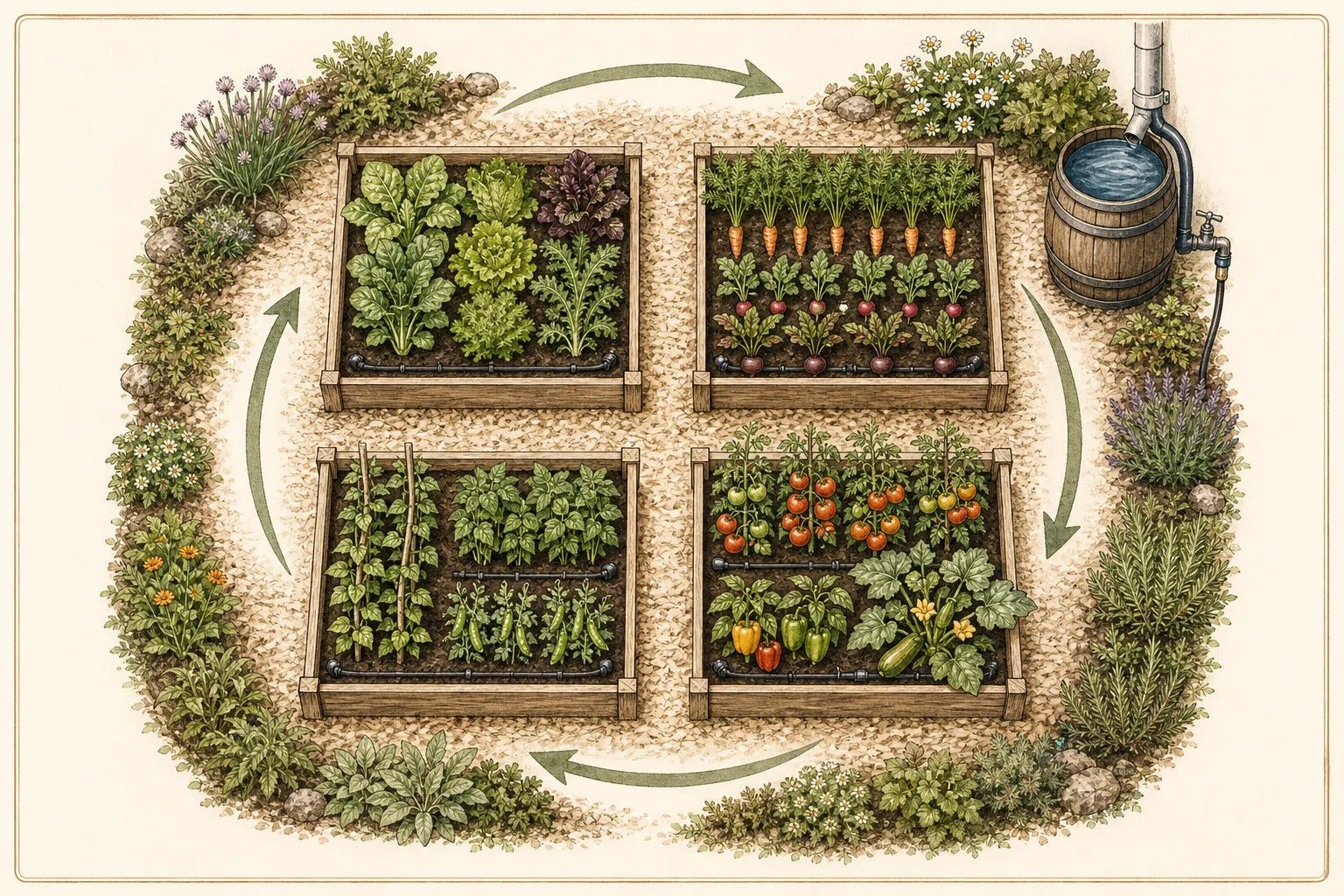
Search the gardening library for a crop, a problem or a technique. Compare plant varieties when you are ready to shortlist choices. Open Studio when seeing the layout would help.
The guides bring together growing advice, sources and practical observations. Your garden adds the local part: its weather, soil, harvests and the time you have to care for it.