Growing Dill
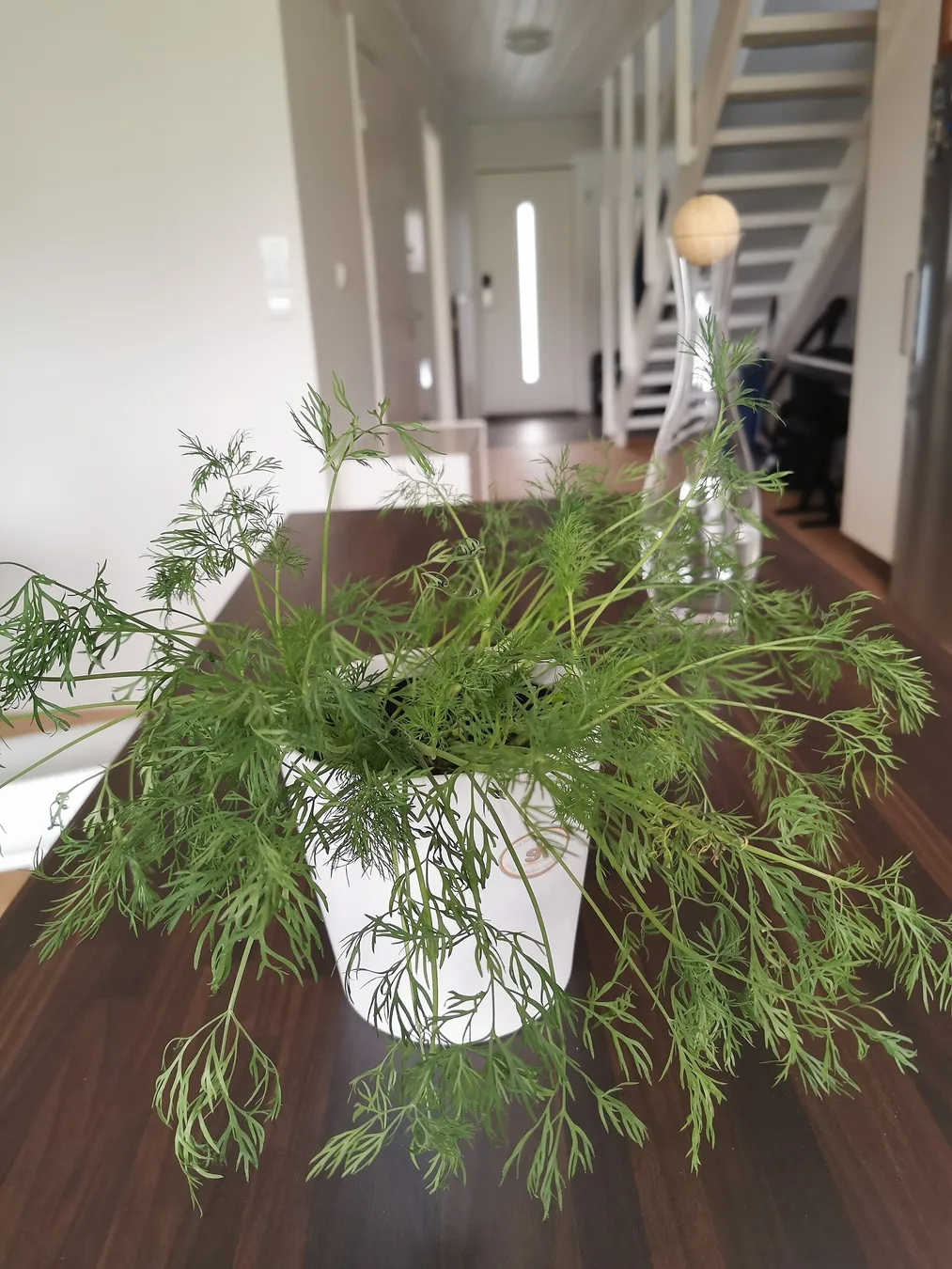
Leave room for the flower stems
Dill can be a handful of leaves for dinner or a tall flowering plant supplying seed. Those are different uses of the same space. Place it where the mature stems can remain without blocking your route through the bed.
Start where it will grow
Direct sowing avoids disturbing a plant that is difficult to transplant. Maryland Extension recommends sowing after frost danger has passed. Dill commonly reaches two to three feet; exposed plants may need support. Decide whether you want self-sown seedlings next year before letting all the seed fall.
Pick the harvest you need
Leaves and seed have different harvest stages. Gather foliage for use while it is available; the Extension guide highlights the beginning of flowering for leaf harvest. Let seed become flat and brown before collecting it.
Make next season easier
Record variety, sowing date, flowering date and whether stems leaned or fell. Note where volunteers appear. Use those observations to choose a better location or support arrangement rather than crowding more plants into the same corner.
Sources and next steps
University of Maryland Extension: Dill supports the growing guidance. Regional timing and cultivar behavior vary; the profile above comes from our curated herb data. Reviewed September 23, 2026.
- Record a dill observation and include the herb name in your note.
- Compare the herb guides before grouping plants by care needs.
- Understand soil drainage.